

Sometimes you just need to know. Maybe you lost touch years ago. Maybe you heard a rumor, or maybe something just doesn’t feel right and you can’t ask anyone directly.
If you’re trying to find out whether someone has passed away, and reaching out to people who knew them isn’t an option, the internet can actually help more than you’d expect.
Let’s walk through the most reliable ways to check.
1. Legacy.com
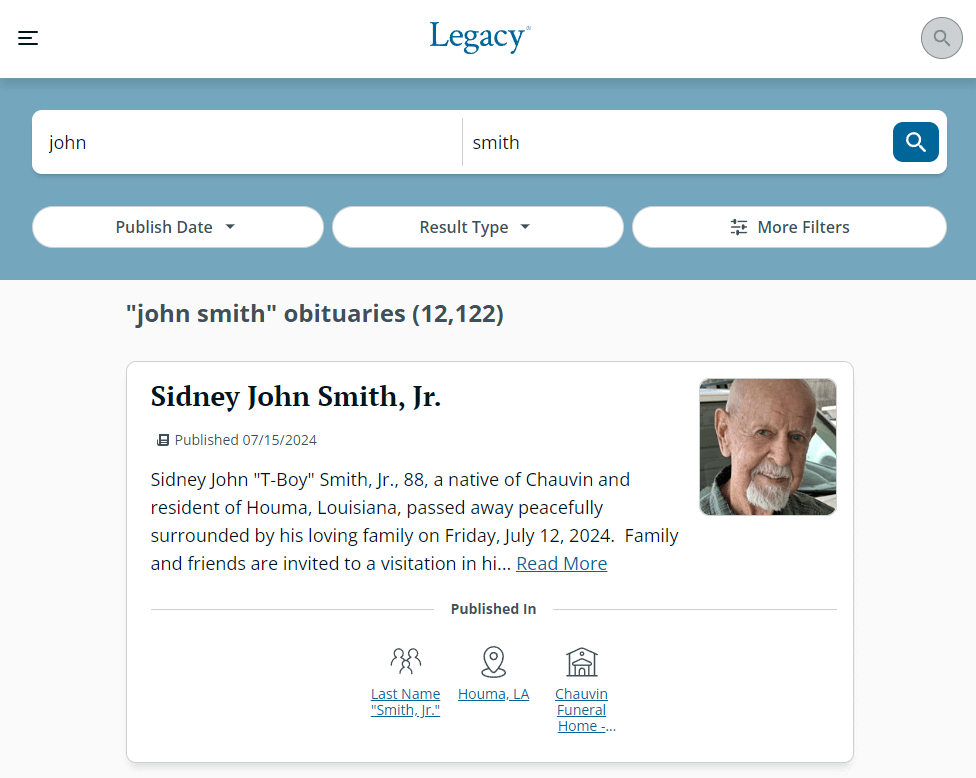
We’ll start with the place that is designed for this exact purpose.
Legacy.com is the largest obituary website in the U.S., covering over 70% of all deaths nationwide
The website is free to use. You can search for obituaries by entering the person’s first and last names, then narrow down the results using filters like Publish Date and Location.
If there’s an obituary out there, this site often finds it.
2. FindaGrave.com
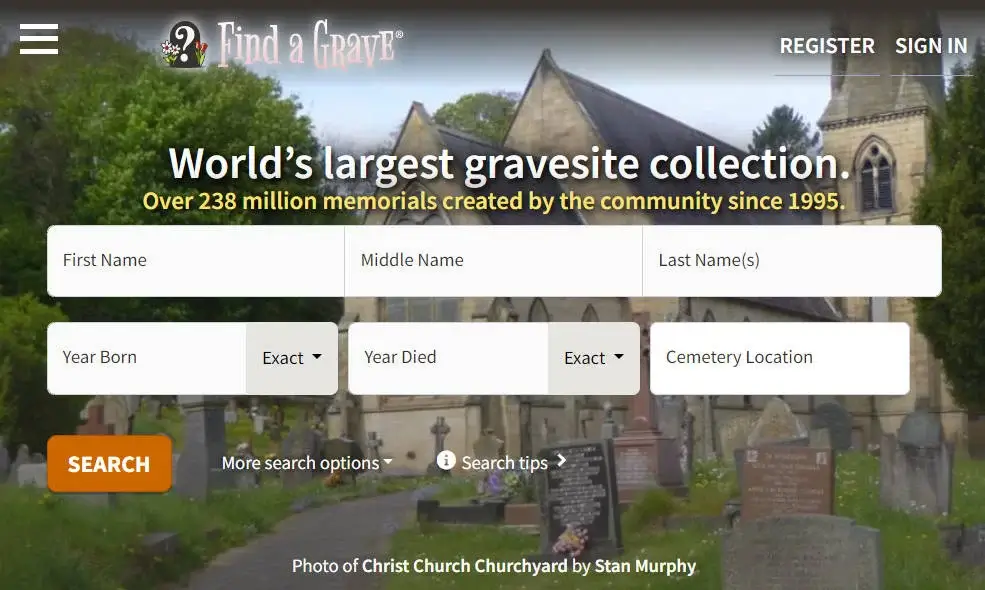
If there’s no obituary, burial records can help.
FindaGrave.com specializes in making cemetery records easily searchable. It offers details about cemeteries and individual memorials.
A couple of things to keep in mind, though, very recent burials stay private for about three months. And it won’t have an entry if the person you’re looking for was cremated or not put in a grave (buried at sea, etc).
Still, if there is a grave or memorial, this site is one of the best places to find it.
3. SortedByName.com
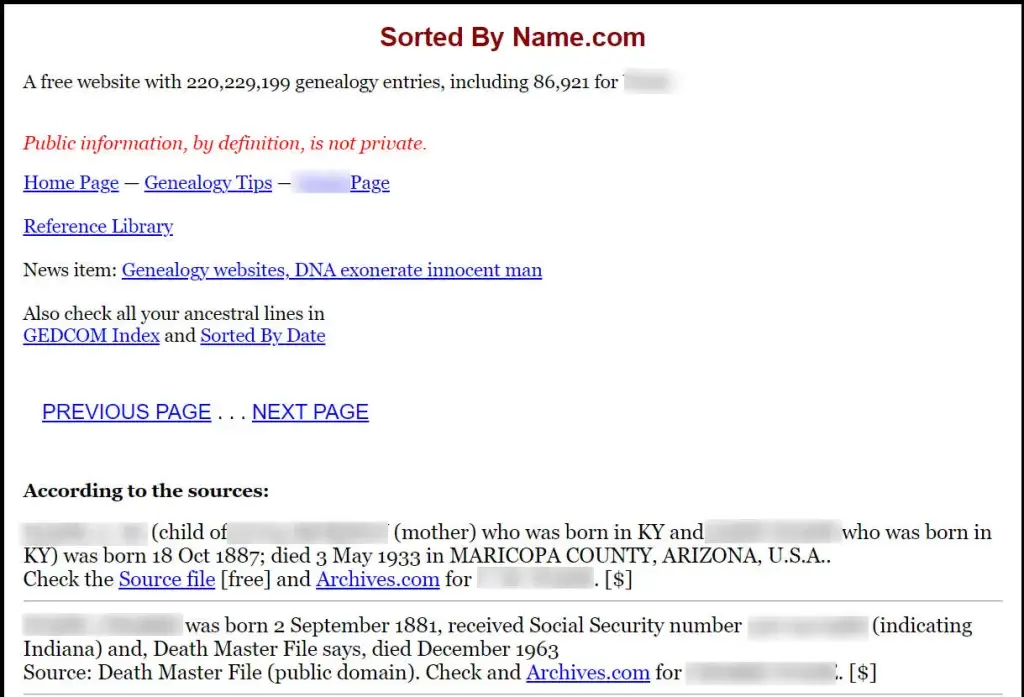
Genealogy sites can be helpful, and sometimes they’re surprisingly detailed.
There is a free genealogy site called SortedByName. It has over 220 million genealogy entries, sourcing genealogy data from various resources.
You can look up someone’s name on the website and locate their birth, marriage, divorce, and death records.
4. Ancestry.com
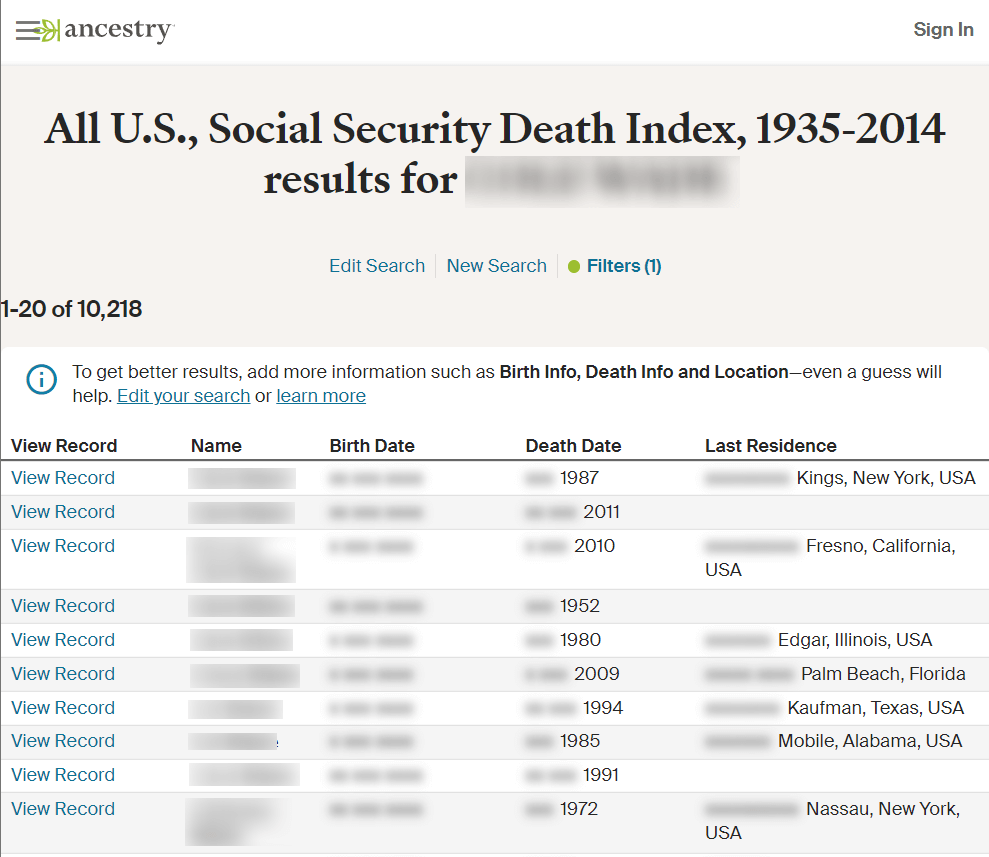
Ancestry is a paid service with an extensive collection of death records, obituaries, cemeteries, and burial records. It uncovers details like time and location of death, cause of death, birth information, and next of kin and family origins.
You can start with Ancestry’s 14-day free trial. But be careful: subscriptions auto-renew and you’ll be billed $6.49 to $39.83 per month, depending on the plan you choose. The plan renews automatically. If you don’t want to continue, cancel before the trial ends.
5. Familysearch.org
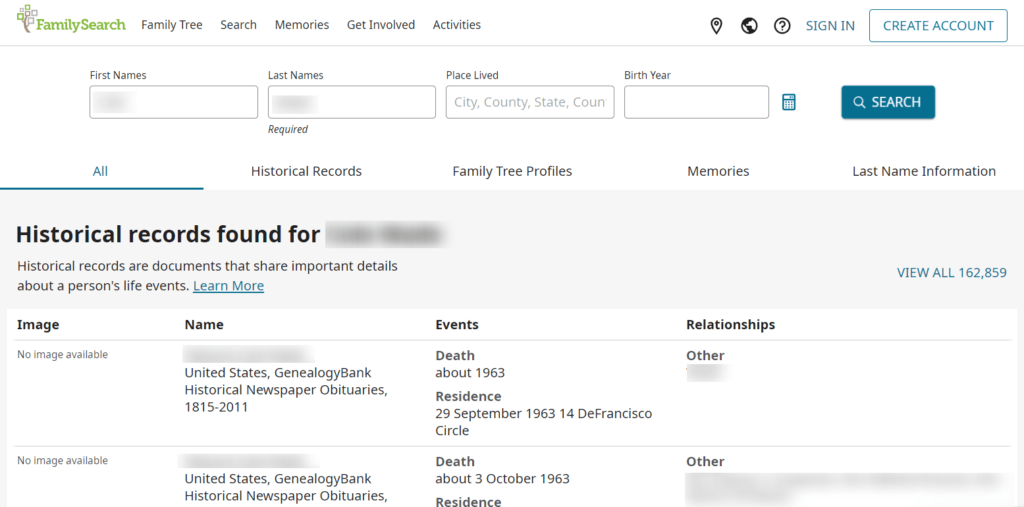
FamilySearch.org is another free website offering genealogical records. It allows you to look up someone’s name and find their historical records, family tree profiles, and more. This might give you the date of someone’s death.
The records aren’t as extensive as Ancestry’s, but for a free service, it’s impressive.
6. FamilyTreeNow.com
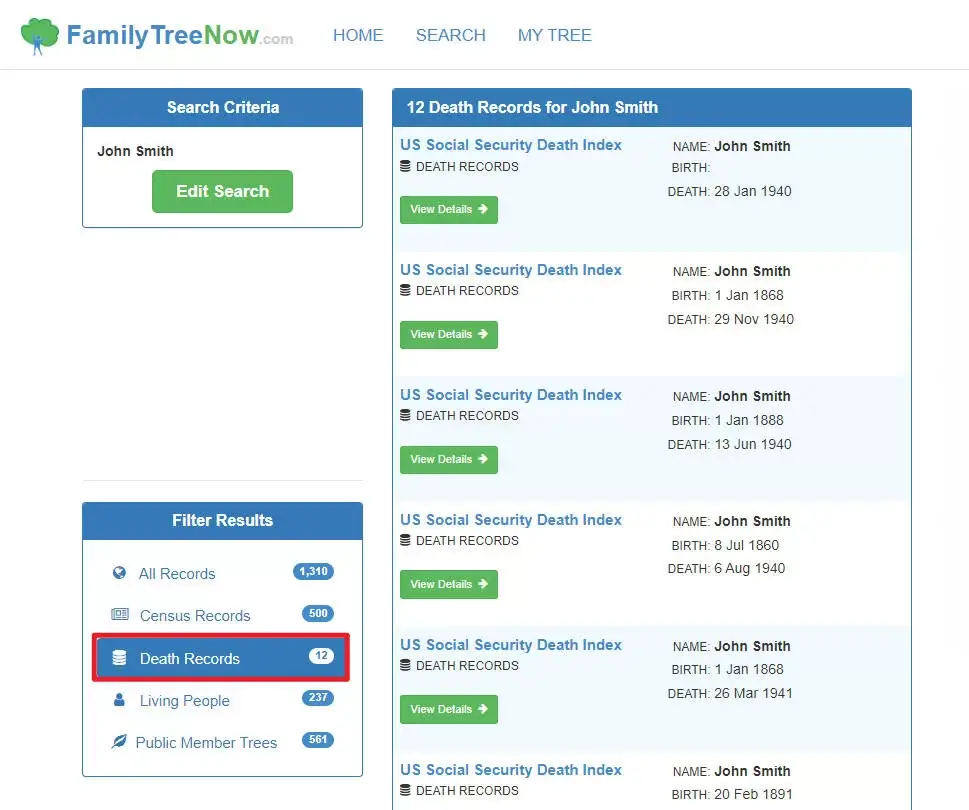
Similar to FamilySearch.org, FamilyTreeNow.com is also a decent and free option to track and research someone. It lets you find a variety of information, such as birthdays, ages, possible associates, addresses, and more.
Simply search the person’s first and last name, and under Filter Results, select Death Records to see if you can locate a record linked to them.
7. Genealogybank.com
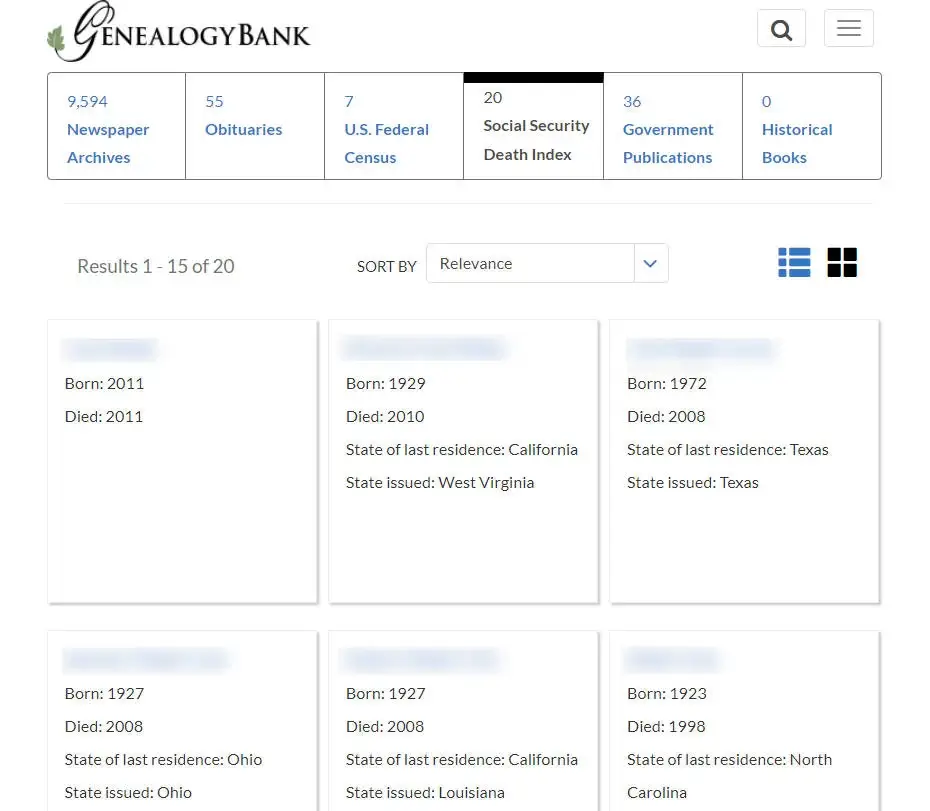
GenealogyBank is another powerful genealogical service with over 2 billion genealogy records from newspapers, census records, government documents, and more.
You can run an Obituary Search with GenealogyBank to see if you can locate someone’s obituary. Alternatively, you can search GenealogyBank’s Social Security Death Index to find details like birth and death dates, where someone lived, and where they got their Social Security card.
8. Search for An Online Obituary
A simple online search with Google or Bing might reveal an obituary or memorial service information.
If you haven’t done so, simply google the person’s name, location (where they are originally from or where their parents live), and words like “death,” “obituary,” or “memorial”.
Be prepared to dig, especially if the name is common. But sometimes, this simple search turns up exactly what you need.
9. Check Social Networks
If all else fails, you might want to spend some time combing through social networks. Think about who knew the person you’re looking for, such as their siblings, friends, or relatives.
People often share memorial posts, condolences, or anniversaries that quietly confirm what you’re trying to find out.
Final thoughts
Looking for this kind of information isn’t about curiosity; it’s usually about closure, clarity, or peace of mind.
If one method doesn’t work, try another. And take breaks if you need to; this kind of search can be emotionally heavy.
Hopefully, one of these steps helps you find the answer you’re looking for. Feel free to leave a comment below if you’ve found another site that works for you, or if you have any questions or suggestions.
Leave a Reply